Summer Strawberry Embroidery
A Designer’s First Impressions: Sweet, Seasonal, and Surprisingly Versatile
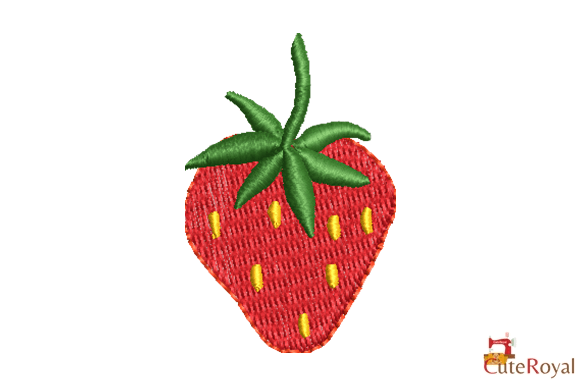
As an embroidery designer who’s tested hundreds of motifs for personalized gift shops and Etsy sellers, I opened Summer Strawberry Embroidery expecting cheerful simplicity—and found something richer. It lands with immediate warmth: ripe, plump, and gently dimensional, not cartoonish or overly stylized. The leaves curl with organic softness; the seeds are suggested—not over-rendered—giving it a handmade charm that reads as both modern and timeless. It feels seasonal without being fleeting, sweet without saccharine, and garden-inspired without leaning into rustic cliché. For customers seeking emotional resonance—a new mom choosing a baby blanket, a couple selecting wedding keepsakes, or a small shop curating summer market bags—this design quietly signals care, freshness, and intention.
Where This Design Truly Shines in Personalized Gifting
Summer Strawberry Embroidery isn’t just decorative—it’s narrative. Its appeal unfolds across use cases:
- Baby embroidery: Gentle on onesies, swaddles, and crib bumpers—its rounded shape and soft edges avoid visual sharpness, making it ideal for nursery decor and early milestones.
- Wedding gift: Stitched onto linen pillow covers, cotton napkins, or muslin market bags, it adds a touch of joyful, edible romance—think “farm-to-table” elegance for garden weddings or bridal showers.
- Family keepsakes: When paired with a monogram or date on a lightweight blanket or tea towel, it transforms everyday items into heirloom-adjacent pieces.
- Small shop product: As a signature motif for a boutique kitchen line, it elevates embroidered towels, aprons, and tote bags—especially when used consistently across packaging and social media visuals.
- Etsy seller & digital embroidery file buyer: Its clean lines and balanced proportions scale beautifully from 3” to 5”, making it highly adaptable for mockups, printable mockup templates, and layered listings.
Smart Placement: Where to Use It—and Where to Pause
This is where real-world testing matters. Summer Strawberry Embroidery performs best on stable, medium-weight fabrics: cotton poplin, linen blends, quilting cotton, and light denim. But here’s what I learned stitching sample after sample:
- Avoid dense textures: Thick terry cloth (like heavy bath towels) obscures fine leaf detail—opt instead for flat-weave kitchen towels or flour sack cotton.
- Stretchy fabrics need caution: On baby bodysuits or knit onesies, stabilizer choice is non-negotiable. Use cutaway + topping for crisp seed definition.
- Curved surfaces demand planning: Don’t place it near shoulder seams or bag gussets without testing hoop placement first—it can distort if tension isn’t perfectly managed.
- Dark fabric? Check contrast: Light thread colors (ivory, pale pink, mint) read beautifully—but verify visibility against navy or charcoal in your finished product mockup, not just on screen.
- Frequent washing? Prioritize stitch density: Overly dense fills trap moisture and wear faster. If using on aprons or market bags, confirm the machine embroidery design balances coverage with breathability.
Why It Builds Trust—and Turns Browsers into Buyers
In my work with handmade product sellers, I’ve watched how one well-chosen motif shapes perception. Summer Strawberry Embroidery elevates perceived value instantly—not through complexity, but through cohesion. Its food-inspired joy feels authentic, not generic. Customers see it on an embroidered towel and think, “This was chosen with care,” not “This was mass-produced.” That emotional connection translates directly to engagement: better photo performance (the red pops against neutral backdrops), higher click-through on Etsy listings, and stronger repeat interest from wedding planners or baby registries. For gift shop owners, it also signals curation—pairing it with complementary botanical motifs or coordinating thread palettes reinforces brand voice. And because it sits comfortably in both Food and Embroidery categories, it broadens search visibility without diluting identity.
Practical Notes Every Embroiderer Should Test Before Production
Before committing to customer orders—or uploading your next Etsy listing—run these checks:
- Test on scrap fabric that matches your intended product (e.g., actual flour sack cotton, not quilting cotton).
- Compare thread colors in natural light—not just under studio bulbs—to ensure warmth and contrast hold up.
- Confirm hoop size compatibility with your machine and common product dimensions (e.g., 4x4 for pillow covers, 5x7 for tote front panels).
- Review stitch density visually in your embroidery software—look for areas where satin stitches might crowd or where fill could overwhelm delicate stems.
- Use appropriate stabilizer: Tear-away for stable wovens, cutaway for knits or textured weaves, and water-soluble topping for looped surfaces like terry.
- Run side-by-side mockups on light and dark fabric—small details (like vein lines in leaves) can vanish on deep tones.
- Inspect finished samples closely: Are seed dots distinct? Do leaf tips feather cleanly? Does the strawberry body sit flat, or bubble at the edges?
- Verify commercial licensing before selling finished products—especially if you’re a small shop owner or digital embroidery file reseller.
Final Thought: A Small Motif With Big Gift Potential
Summer Strawberry Embroidery doesn’t shout. It invites. It fits naturally into moments that matter—first birthdays, garden weddings, summer markets, quiet mornings with coffee on a freshly embroidered towel. For embroidery makers building a reputation for thoughtful personalization, it’s more than a digital embroidery file. It’s a reliable bridge between craft and connection. When stitched with attention to fabric, stabilizer, and context, it becomes part of a story customers want to hold—and share. And in today’s handmade marketplace, that’s not just good design. It’s good business.