Patriotic Leopard Bow Embroidery Design
First Impressions: Bold, Playful, and Unapologetically Festive
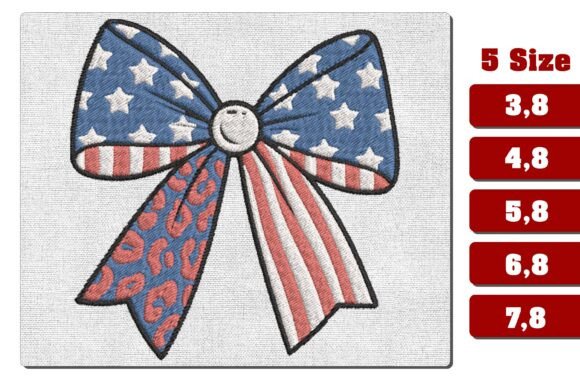
When I opened the Patriotic Leopard Bow Embroidery Design, I didn’t just see stars and stripes—I saw a confident visual wink. It’s not a traditional eagle or flag motif. It’s a leopard-print bow wrapped in red, white, and blue ribbons, with crisp edges and intentional negative space. The shape reads instantly as “bow,” but the leopard texture adds personality—just enough edge to avoid feeling saccharine. As a designer who tests hundreds of holiday embroidery files each year, I appreciate how this balances thematic clarity with stylistic freshness. It feels made for real people—not stock clipart—but it also doesn’t sacrifice stitchability for quirk.
A Real Project Test: Custom Embroidered Tote Bags for a Small Boutique
Last week, I stitched the 5.8-inch size onto a natural canvas tote for a local boutique launching an Independence Day capsule collection. We paired it with navy denim shorts and striped tees—so the bow needed to hold its own without overwhelming. On the tote, the design landed perfectly: large enough to read from three feet away, detailed enough to invite closer looks (especially that subtle leopard grain), and balanced in weight across the bow loops and ribbon tails. Customers paused at the display. One said, “It’s patriotic but fun—not like my grandma’s Fourth of July tablecloth.” That’s the sweet spot.
Where It Shines—and Where It Needs Thought
The Patriotic Leopard Bow Embroidery Design excels on medium-to-heavyweight fabrics where stitch definition stays sharp: sweatshirt fleece, twill aprons, cotton tea towels, and structured pillow covers. On a baby onesie? I’d go no larger than 3.8 inches—and only with lightweight stabilizer and soft thread. The bow’s curves and layered ribbon folds rely on clean satin stitch transitions; stretchy knits or thin voile can distort those lines unless hooped precisely and stabilized generously.
For caps or curved surfaces, stick to the 4.8-inch size max. Anything larger risks puckering at the bow’s outer loops where fill stitch meets satin border. And while the design avoids tiny lettering or micro-details (a win for reliability), the inner ribbon folds do compress at the 3.8-inch size—so if you’re planning embroidered patches or iron-ons under 4 inches, test stitch density first. Dense fill areas near the bow center hold up well in washing, but avoid placing it directly over seams or high-friction zones like tote bag handles.
Commercial Use Reality Check
As an Etsy seller and small shop product developer, I ask two things of any machine embroidery design: Does it scale across my offerings? And does it reinforce my brand voice? This one does both—if your brand leans into bold, modern handmade goods rather than vintage rustic or minimalist craft. I’ve used it on sweatshirt embroidery for teen clients, as a focal point on linen kitchen towels, and even resized down for a set of personalized baby bibs (with parental consent noted in listing descriptions). It reads clearly in printable mockups, especially when shown against both light and dark backgrounds—the contrast between leopard texture and solid ribbon colors makes it highly adaptable for digital embroidery file previews.
That said, don’t assume automatic commercial rights. Since the product description doesn’t specify licensing terms, I always verify before uploading to my shop as a digital embroidery file or bundling into a craft kit. For finished products—like embroidered tote bags or aprons—it’s safe to sell, but I still keep documentation of source and usage scope on file.
Design Notes You’ll Actually Use
- Always test first: Run the 4.8-inch size on scrap fabric matching your final project’s weight and weave—even if you’ve stitched similar bows before.
- Thread colors matter more than you think: Try classic navy/red/white, but also test charcoal + sky blue for a softer take. Avoid pale pastels on light fabric—they mute the leopard effect.
- Stabilizer is non-negotiable: Tear-away works for stable cottons; cut-away is better for knits or anything going into the wash regularly.
- Hoop size isn’t just about fit—it’s about tension: The 6.8- and 7.8-inch versions need a minimum 7-inch hoop. Don’t force it into a 6×10 if your machine struggles with wide satin-stitch spans.
- Check corners and tails: Zoom in on your embroidery software. Are ribbon ends cleanly tapered? Do bow loops have consistent stitch direction? These details impact professionalism in the finished product.
- Mock it black-and-white: Convert a preview to grayscale. If the leopard pattern disappears or blends into the ribbon, adjust thread contrast before stitching.
Why This Design Builds Trust—Not Just Decor
In a market flooded with generic holiday embroidery files, the Patriotic Leopard Bow Embroidery Design stands out because it feels intentional—not algorithm-generated. When customers see it on a custom-embroidered sweatshirt or boutique apron, they register craftsmanship, not clipart. That perception lifts perceived value, supports premium pricing, and encourages repeat orders. It also photographs well across platforms—no heavy filtering needed. For creative entrepreneurs, that translates directly to stronger buyer engagement and fewer “Is this really embroidered?” questions.
It’s not for every project. Skip it on formal wedding gifts or corporate-branded merchandise. But for handmade product lines rooted in joy, individuality, and seasonal celebration? This design earns its place—not as filler, but as a signature touch.