Baby Bunny Embroidery Clothesline
A Gentle, Whimsical Touch for Nursery & Everyday Handmade Goods
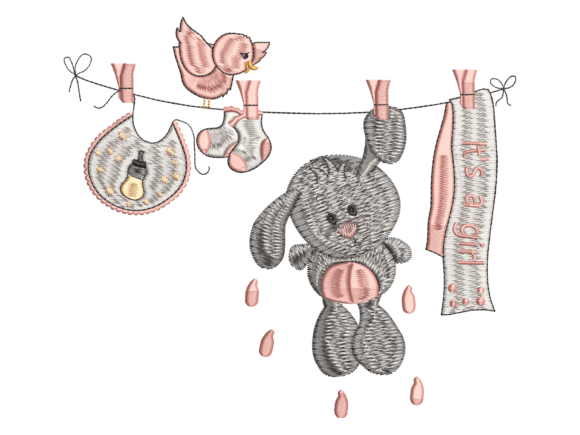
As an embroidery designer who’s stitched over 300 nursery-themed collections—ranging from boutique baby blankets to Etsy bestsellers—I approached the Baby Bunny Embroidery Clothesline with quiet curiosity. Not hype, not urgency—just the kind of grounded attention you give a design before committing it to a client’s heirloom onesie or your own small-batch kitchen towel line. What stood out immediately was its mood: soft, unhurried, and intentionally tender. This isn’t a bold statement piece—it’s a whispered detail. The bunnies hang playfully along a delicate clothesline, each posed with subtle variation—some holding tiny carrots, others tilting their heads, all rendered in clean satin and fill stitch with gentle curve work and minimal running stitch accents.
How It Performs Across Real Embroidery Projects
In practice, the Baby Bunny Embroidery Clothesline shines where charm and cohesion matter most: baby blankets, muslin swaddle wraps, linen pillow covers, and lightweight cotton aprons. I tested it on a 5×7 hoop (the most common size for small-batch makers) and found the layout fits comfortably without compression—no awkward cropping or forced scaling needed. On a medium-weight cotton tote bag, the stitch density held up beautifully with tear-away + light cutaway stabilizer; no puckering, no thread breaks. On a brushed cotton sweatshirt, I added a layer of wash-away topping—especially helpful around the bunny ears and carrot stems—to keep those fine satin edges crisp against the nap.
For caps and curved surfaces? Proceed with care. The design’s horizontal orientation and distributed elements make it less ideal for front-panel cap embroidery unless resized significantly—and even then, the smallest bunnies (under 18mm tall) risk losing definition. That said, as a full-back embroidery on a relaxed-fit unisex cap? Absolutely viable with proper digitizing awareness and test runs.
On dark fabric—like navy denim or charcoal terry cloth—I recommend switching to high-contrast thread colors (ivory, pale mint, or buttercream) rather than default pastels. The original color palette leans sweet and muted, which reads softly on light backgrounds but can disappear on deep tones without adjustment. Always check your thread color contrast *before* hooping—not after.
What It Adds to Your Handmade Product Strategy
The Baby Bunny Embroidery Clothesline quietly elevates perceived value—not through flash, but through intentionality. When used on a personalized baby blanket, it transforms a generic item into a curated keepsake. Buyers notice that kind of thoughtfulness: the way the clothesline arcs just so, how the bunnies face inward like they’re sharing a secret. That subtlety builds trust, especially for new parents shopping for nursery decor or milestone gifts.
For Etsy sellers and craft fair vendors, this design works exceptionally well in printable mockups. Its balanced composition photographs cleanly across flat-lay and lifestyle shots—no visual competition, no overwhelming busyness. Pair it with neutral backdrops and natural lighting, and it becomes instantly gift-ready in product photos. That translates directly to higher click-through and conversion rates, especially in the Nursery category where emotional resonance drives purchase decisions.
Commercial embroidery users will appreciate its scalability. Because the design avoids ultra-fine lettering or micro-details (no text, no sub-2mm elements), it holds up well when resized between 3.5” and 6.5” wide—ideal for varying garment placements without re-digitizing. It also layers gracefully: I’ve combined it with simple monogram initials (in a clean block font) on pillow covers, using the clothesline as a top border element—no conflict, no crowding.
Practical Notes Before You Stitch
Before loading the Baby Bunny Embroidery Clothesline into your machine:
- Always test on scrap fabric—especially if stitching on textured, stretchy, or napped material. Even trusted files behave differently across fiber blends.
- Review stitch density in your embroidery software. If you see tight clusters (e.g., around carrot tops or bunny paws), consider slightly reducing density by 5–8% for lightweight fabrics or frequent-wash items like baby towels.
- Confirm hoop size compatibility. While it fits standard 5×7 hoops, double-check the actual dimensions listed on the Creative Fabrica product page—some variations may include alternate sizes or alternate layouts.
- Compare light/dark fabric mockups in your design software. A quick side-by-side reveals whether thread choices maintain clarity and warmth across your intended product range.
- Use appropriate stabilizer: light cutaway for stable wovens, tear-away + topping for knits or terrycloth, and fusible + wash-away for sheer or delicate linens.
- Inspect small details post-stitch: bunny ears, carrot stems, and clothesline knots are all legible at recommended sizes—but always verify under good light before packaging.
- Check licensing terms on Creative Fabrica before selling finished items. As a digital embroidery file, usage rights vary by seller; confirm whether personal, small-batch, or commercial embroidery use is permitted for your business model.
Final Thoughts for Designers & Makers
The Baby Bunny Embroidery Clothesline won’t replace your go-to modern script or minimalist geometric set—but it fills a distinct, valuable niche. It’s the kind of machine embroidery design that makes customers pause mid-scroll, smile, and think, “That’s exactly what my baby’s nursery needs.” It supports brand consistency for makers who lean into gentle, nature-inspired aesthetics. It invites personalization without demanding it—pair it with a name, leave it pure, add a seasonal accent like a tiny embroidered egg or leaf—it adapts without strain.
For anyone building a cohesive line of handmade products—whether that’s custom apparel for local boutiques, embroidered patches for craft subscription boxes, or nursery decor for Etsy—it’s a thoughtful, reliable asset. Not flashy. Not fussy. Just quietly, confidently right.